HOYTS Melbourne Central Shows Why the Future of Cinema Has to be Felt
Article by Mike Loder
Videography & photos by Nathan Langridge
This week at HOYTS Melbourne Central, Levelhead Gaming got a look at what the future of the cinema experience might feel like.
Not just look like ... Feeeeeel like.
With so many of us already have big TVs, surround sound, OLED screens and all the bells and whistles at home, cinemas are being pushed to offer something more than just a bigger screen.
Not to mention the endless streaming subscriptions and enough content to last several lifetimes.
HOYTS’ answer at Melbourne Central is an experience built around choice and immersion. APEX, IMAX, ScreenX and D-BOX are not simply different ticket types. They are different ways of experiencing films.
And for gamers, a lot of this language feels very familiar.
PlayStation 5 has haptic feedback. Controllers rumble. We talk about frame rates, spatial sound, visual clarity and all that juicy tech that pulls us into a solid gaming session. What HOYTS showed us was cinema moving in a similar direction. Not by trying to become gaming, but by borrowing some of the same sensory ideas that make games feel so engaging.
During the presentation, Damian Keogh, CEO of The HOYTS Group, reflected on the last few years for the cinema industry. Between disrupted release schedules, the Hollywood strikes and the slow rebuild of box office habits, cinemas have had to work harder to remind people why the big screen still matters. He described 2026 as a recovery year and pointed to Melbourne Central as a key part of HOYTS’ investment in premium cinema experiences.

D-BOX: haptic feedback, but make it cinema
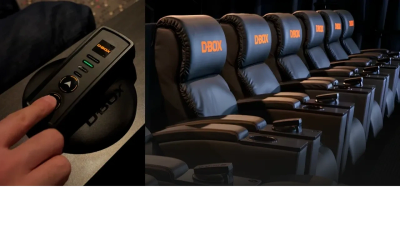
The biggest surprise, and my personal favourite, was D-BOX.
More specifically, the seats.
The easiest way to explain it to a gamer is this: it feels like someone took the haptic feedback from a PS5 controller and built it into a cinema seat.
The motion was not just a gimmick or a basic vibration. At its best, it added accurate texture to what was happening on screen.
During the live-action Moana trailer, the seat movement gave a sweeping ocean shot a soft floating sensation, almost like the waves were moving underneath us. In the Supergirl trailer, a spaceship rotated as it orbited toward landing, and the chair translated that movement into a gentle roll and lowering motion. It was subtle, but clear enough to make the moment feel more physical.
Then came Street Fighter, which is where Nathan felt the tech really packed a punch.
The hits, rumbles and kicks had proper weight to them. Some blows pushed back through the seat, while others tilted depending on the direction and momentum of a swing.
One character was hit against a wall, and the chair translated both the body movement and the impac of the wall. It is hard to describe without sounding a bit ridiculous, but it was genuinely cool.
This was the clearest example of why D-BOX could work so well for action films, game adaptations and anything built around physical impact.
It will not be for everyone. Some people will always prefer the clean stillness of a traditional cinema seat. But for the right film, D-BOX adds something that feels closer to playing than simply watching.
HOYTS says D-BOX seats move in sync with the on-screen action, with controls that let viewers adjust the intensity of the experience. That adjustability matters, because not everyone wants the same level of movement during a film.
IMAX: scale still matters
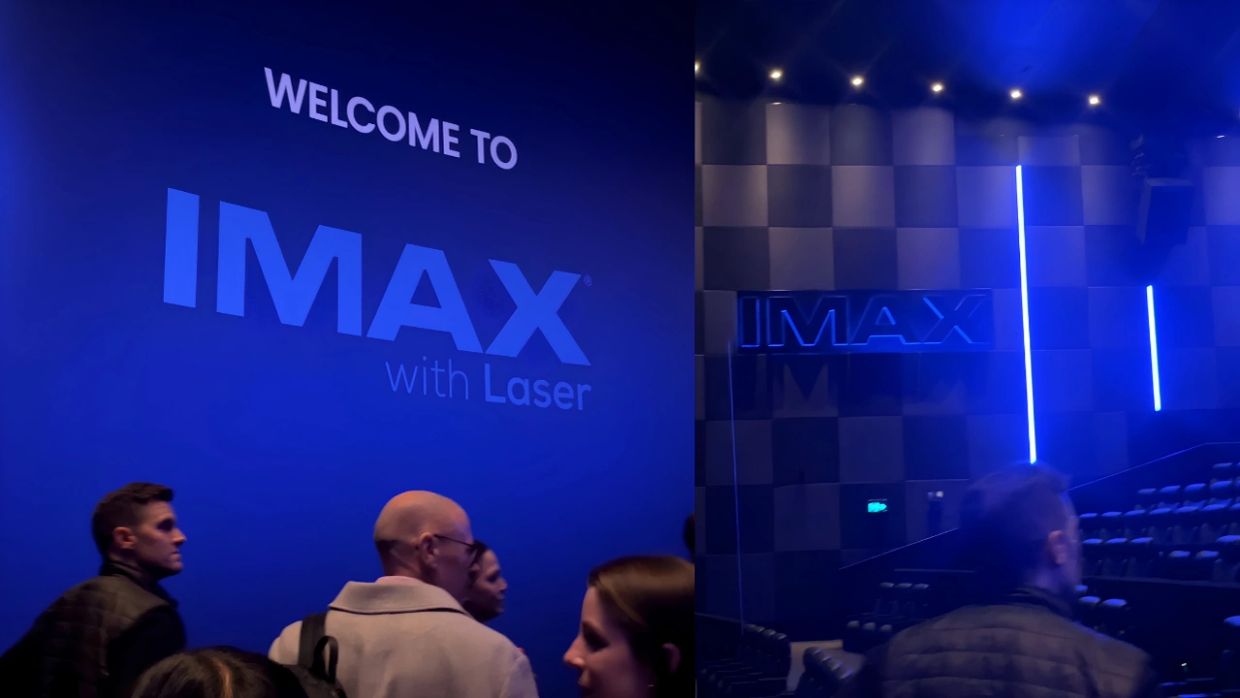
IMAX was the more familiar premium format, but that does not make it less impressive.
The seats were easy to recline, the laser presentation looked huge and clean, and the trailers that stood out most were Dune: Part Three and The Odyssey. Those are exactly the kinds of films that benefit from scale.
Thanks, Nolan.
There is still something powerful about sitting in front of an enormous image and letting it dominate your field of vision. You do not need motion seats or wraparound screens for every film. Sometimes the event is simply the size, the sound and the sense that the room has been built around the image.
For big cinematic worlds, IMAX still feels like the format that says: this is not a casual watch.
This is an outing!
APEX: colour, brightness and the future of the big screen
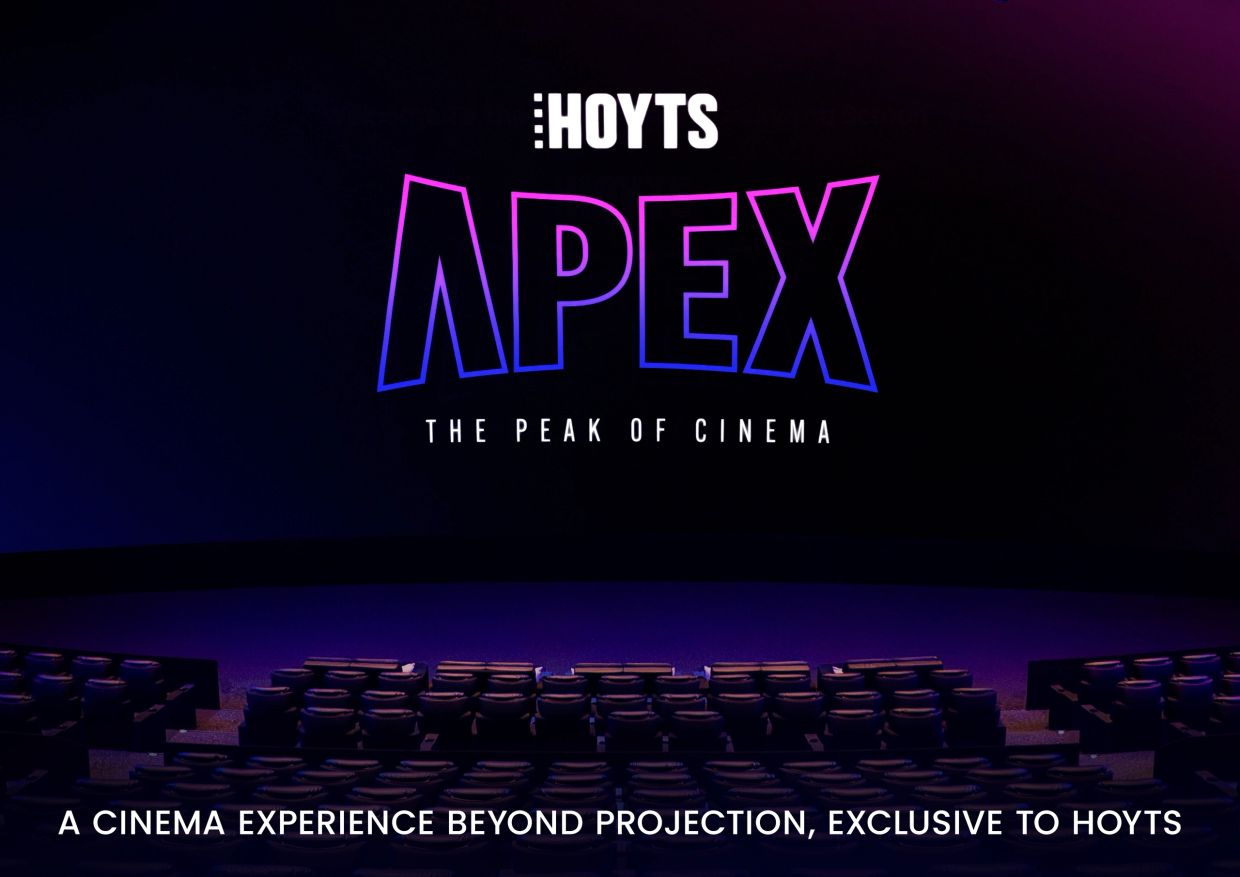
APEX was the format that felt the newest.
The team described it as a major part of HOYTS’ premium cinema push, with Melbourne Central sitting alongside another APEX installation in Perth. Damian Keogh also described APEX as a possible glimpse at where cinema technology is heading.
From what we saw, colour was the immediate standout.
Nathan remarked that the different footage examples made the format’s strengths clear. The Spielberg footage had a different filmic texture, while the animated footage from DreamWorks’ Forgotten Island looked crisp, vivid and extremely clean, allowing its stylised animation to really flourish.
That contrast was probably the most interesting part.
APEX was not just “bright screen is bright.” It showed how different kinds of content can land differently on the format. Live action, filmic footage and animation each seemed to show off a different creative strength.
The Hunger Games: The Reaping footage had strong pops of colour, which I am sure the creative teams behind the costumes, props, makeup and cinematography would be glad to hear. Their work was brought to life in a really vibrant way.
HOYTS describes APEX as combining large scale LED cinema screens with Dolby Atmos surround sound for a sharper, brighter and bolder viewing experience. From our demo, the “brighter and bolder” part was very clear.
ScreenX: the one that might divide the room
ScreenX is probably the format that will split people the most.
It uses additional projection on the side walls of the cinema to extend the image beyond the main screen during selected scenes. HOYTS describes it as a three-screen experience, with side-wall projection used to carry the film world beyond the traditional frame.
And yes, that will divide people.
For some, the extra peripheral imagery may feel distracting. For others, it can make the room feel less like a box and more like a space the film is expanding into.
I overheard some guests saying it pulled them further into the experience, and that feels like the fairest way to describe it. It may depend heavily on the film, the scene and how well the side imagery is used.
Star Wars was a standout here, while Spider-Man: Brand New Day seemed to have moments created specifically for that added screen width. The moment where Spider-Man slingshots himself across New York by webbing out to each side of the room was a strong example of how the format can work when the content suits it.
It may not be for everyone, but it is absolutely something different to try.